

What are kitchen island with seating
A kitchen island with seating is a multifunctional centerpiece that combines food preparation space with dining or social seating.
Best kitchen island with seating
The best kitchen island designs include comfortable counter stools, durable countertops, smart storage, and enough legroom.
How to choose kitchen island with seating
Choose an island based on kitchen size, seating capacity, storage needs, and design style.
Introduction
A kitchen is no longer just a place for cooking. In modern homes, it has become the heart of daily life where families gather, guests socialize, and children finish homework while meals are prepared. This shift in lifestyle has made functional design more important than ever, and one feature stands out above the rest: the kitchen island.
Many homeowners struggle with limited dining space, cluttered countertops, or kitchens that feel disconnected from the rest of the house. A thoughtfully designed island can solve all of these problems at once. It creates additional workspace, introduces smart storage solutions, and encourages interaction in a warm, welcoming environment.
Today, homeowners are investing heavily in open-concept kitchens, and islands with built-in seating have become one of the most requested upgrades. According to recent home remodeling insights, kitchens with multifunctional islands can significantly improve both property appeal and everyday convenience. Whether your style is contemporary, rustic, minimalist, or traditional, there is an island design that can completely transform your kitchen experience.
Quick Summary
- Kitchen islands improve functionality, storage, and social interaction.
- Seating options include bar stools, bench seating, and dining extensions.
- Material choice affects durability, maintenance, and appearance.
- Proper spacing and layout are essential for comfort and movement.
Why Homeowners Love a Kitchen Island With Seating
The popularity of the kitchen island with seating trend continues to grow because it blends practicality with style. Instead of separating cooking and dining spaces, it creates a central hub where everything happens naturally. Families can enjoy breakfast together, guests can interact with the host, and children can stay nearby while meals are prepared.
Modern islands are designed for more than appearance. Many include hidden storage compartments, charging stations, under-counter cabinets, and even built-in appliances. This combination of utility and aesthetics makes them one of the smartest investments for kitchen remodeling projects.
Another major advantage is flexibility. Some islands work as compact breakfast bars in smaller homes, while larger layouts can comfortably seat six or more people. The design possibilities are nearly endless, making it easier to personalize the space according to lifestyle needs.
Types of Kitchen Islands and Seating Styles
Breakfast Bar Islands
Breakfast bar islands are one of the most common choices for modern homes. They usually feature an extended countertop with overhang space for stools. This design creates a casual dining area without requiring a separate table.
These islands work especially well in apartments or compact homes where space efficiency matters. They also encourage conversation and interaction during cooking.
Farmhouse Style Islands
Farmhouse islands bring warmth and charm through natural wood finishes, open shelving, and rustic textures. They often include large countertops that support family-style dining and social gatherings.
This style pairs beautifully with pendant lighting, wooden stools, and stone countertops for a cozy atmosphere.
Waterfall Edge Islands
A waterfall island features countertop material flowing seamlessly down both sides. Quartz and marble are common choices because they create a luxurious appearance with clean lines.
This design is popular in modern and minimalist interiors because it creates a sleek architectural statement while maintaining practical seating space.
Multi-Level Islands
Some homeowners prefer multi-level islands that separate food preparation from dining areas. The raised section hides kitchen mess while maintaining a comfortable eating surface.
This setup is especially useful in busy households where cooking and dining often happen simultaneously.
Best Layouts for Comfortable Seating
Choosing the right layout is critical for comfort and functionality. Poor spacing can make even beautiful kitchens feel cramped and inconvenient.
| Island Shape | Best For | Seating Capacity | Main Advantage |
|---|---|---|---|
| Straight Island | Small kitchens | 2–4 people | Space-saving |
| L-Shaped Island | Open layouts | 4–5 people | Extra prep space |
| U-Shaped Island | Large kitchens | 5–7 people | Maximum storage |
| Double Island | Luxury kitchens | 6+ people | Separate work zones |
Experts recommend leaving at least 36 to 42 inches of clearance around the island for smooth movement. Comfortable seating also requires approximately 24 inches of width per person.
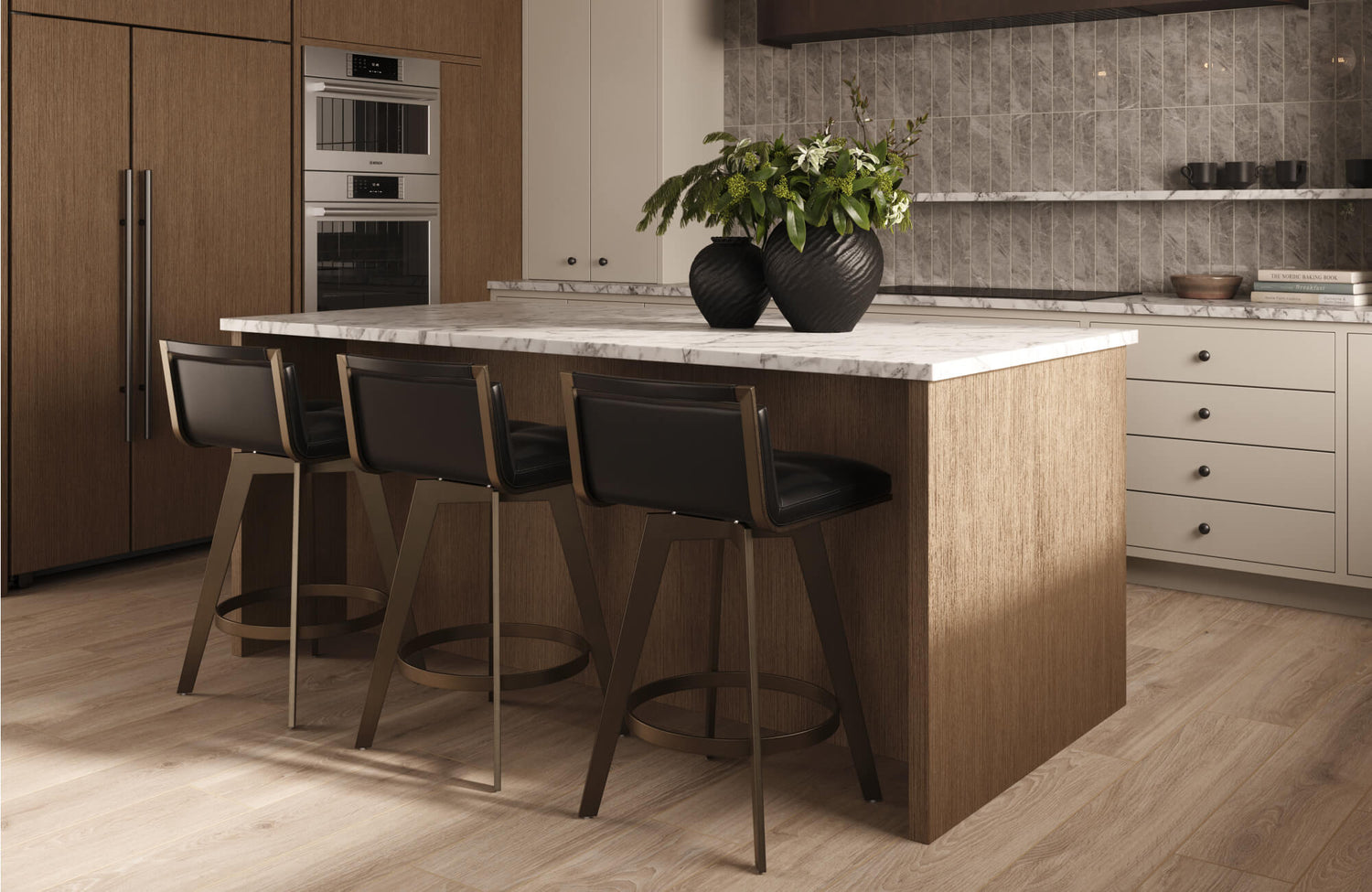
Choosing the Right Materials
The materials you choose affect both appearance and long-term durability. Since islands often become high-traffic areas, selecting strong surfaces is essential.
Quartz countertops remain one of the most popular choices because they resist stains, scratches, and moisture. Granite continues to attract homeowners who want a natural stone appearance with strong heat resistance. Butcher block countertops add warmth and character, especially in farmhouse-inspired kitchens.
For seating, upholstered stools provide comfort, while metal or wooden stools offer durability and easier maintenance. Swivel stools are becoming increasingly popular because they improve flexibility and movement in social settings.
Lighting also plays an important role. Pendant lights above the island create visual focus while improving task lighting for cooking and dining.
Designing a Kitchen Island With Seating for Small Spaces
Small kitchens can still benefit from islands when designed carefully. Many homeowners assume islands require large floor plans, but compact versions can dramatically improve efficiency.
A narrow island with two stools can replace bulky dining furniture while adding prep space and storage. Rolling or movable islands are also practical for flexible layouts because they can be repositioned when needed.
Light-colored finishes help smaller kitchens feel more open and airy. Reflective surfaces like polished quartz or glossy cabinetry can visually enlarge the room. Open shelving instead of bulky cabinets also helps reduce visual heaviness.
In urban homes and apartments, space-saving furniture has become increasingly important. Foldable stools and slim-profile seating options make compact islands far more functional without overcrowding the kitchen.
Real-Life Example: A Family-Friendly Kitchen Upgrade
A family of five living in a suburban home renovated their outdated kitchen to improve functionality and create better family interaction. Their previous layout separated the dining area from the cooking space, making daily routines inconvenient.
They installed a large island with quartz countertops, hidden drawers, and seating for four. The island became the central gathering point for breakfast, homework sessions, and evening conversations. According to the homeowners, the renovation improved both organization and family connection while increasing the overall value of the property.
This example highlights how a thoughtfully planned island can completely transform how a kitchen feels and functions.
Pros and Cons
Pros
- Adds extra seating without a separate dining table
- Improves storage and countertop workspace
- Encourages social interaction
- Enhances property value
Cons
- Requires proper spacing for movement
- Larger islands can increase renovation costs
- Poor layouts may overcrowd smaller kitchens
- Some materials require regular maintenance
Expert Tips for Better Island Design
- Choose stools with back support for longer seating comfort.
- Use pendant lighting for both functionality and style.
- Include electrical outlets for charging devices and appliances.
- Match island materials with overall kitchen décor for consistency.
Common Mistakes to Avoid
- Ignoring walking clearance around the island
- Choosing oversized seating for compact spaces
- Using delicate countertop materials in busy kitchens
- Forgetting adequate lighting above the seating area
Who Should Use This Design
Families, entertainers, remote workers, and homeowners who enjoy open-concept living can benefit greatly from islands with seating. Busy households especially appreciate the convenience of combining dining, cooking, and social interaction in one place.
For people who frequently host gatherings, islands naturally encourage conversation while meals are being prepared. They also help children stay connected with parents during daily routines.
Even smaller households gain value from the added storage and workspace. In many modern homes, the kitchen island becomes more useful than a traditional dining table because it adapts to multiple activities throughout the day.

Smart Features Trending in Modern Kitchens
Technology is increasingly shaping kitchen design. Many modern islands now include smart storage systems, wireless charging pads, built-in wine coolers, and touchless lighting controls.
Another growing trend is sustainable design. Homeowners are choosing eco-friendly materials such as recycled wood, energy-efficient lighting, and low-maintenance countertops. These choices reduce environmental impact while improving long-term durability.
Industry insights also show that multifunctional kitchens remain one of the most valuable remodeling investments. Homes with updated kitchens and practical seating areas often attract stronger buyer interest in competitive real estate markets.
Kitchen Island With Seating Design Ideas
The ideal kitchen island with seating design depends on lifestyle, available space, and personal style preferences. Contemporary homes often favor sleek quartz islands with minimalist stools, while rustic interiors lean toward natural wood finishes and farmhouse details.
Homeowners looking for luxury may choose oversized islands with waterfall edges, integrated sinks, and premium lighting. Others may prefer compact designs that maximize efficiency without overwhelming smaller kitchens.
No matter the style, the goal should always be balance. A well-designed island should feel inviting, functional, and visually connected to the rest of the kitchen.
FAQs
What size should a kitchen island be for seating?
The ideal size depends on the number of seats and available kitchen space. Most islands require at least 24 inches of width per seat for comfort.
Is a kitchen island with seating worth it?
Yes, a kitchen island with seating adds functionality, social value, storage, and visual appeal while improving daily convenience.
Which stools are best for kitchen islands?
Comfortable stools with proper height, footrests, and durable materials work best for long-term use.
What lighting works best above an island?
Pendant lighting is the most popular choice because it provides focused illumination while enhancing design aesthetics.
Can islands increase home value?
Modern kitchen upgrades, especially multifunctional islands, can positively impact buyer interest and resale value.
Summary Recap
Kitchen islands have evolved into multifunctional spaces that combine cooking, dining, storage, and social interaction. From compact breakfast bars to luxurious waterfall designs, there are options available for every kitchen size and style. Choosing the right layout, materials, seating, and lighting can dramatically improve comfort and functionality while enhancing the overall appearance of the home.
Conclusion
A thoughtfully designed kitchen island with seating can completely redefine how a kitchen looks and feels. Beyond adding extra seating, it creates a welcoming environment where cooking, conversation, and daily life naturally come together.
Read More:-Kitchen Island Design Ideas for Modern and Functional Homes